Commercial Stair Lift Installation: A Complete Guide for Accessible Business Properties
Accessibility isn’t just a legal checkbox for businesses, it’s a direct reflection of how welcoming and functional your property actually is for employees, customers, and visitors. When a building has stairs as the only way to move between levels, that immediately limits who can access certain areas comfortably and independently. Commercial stair lift installation solves this problem directly, offering businesses a practical way to make multi-level spaces genuinely accessible.
Here’s a complete look at what commercial stair lift installation involves, the main options available, and what business owners should think through before moving forward.
Why Businesses Invest in Stair Lifts
Legal Compliance
Depending on the type of business and the specific building, accessibility requirements under regulations like the Americans with Disabilities Act often come into play. A properly installed stair lift can be part of meeting these obligations, particularly in older buildings where a full elevator installation isn’t practical.
Genuine Accessibility for Employees and Customers
Beyond compliance, stair lifts allow employees with mobility limitations to work comfortably across all levels of a property, and give customers or visitors with mobility challenges the ability to access your business independently, without needing to ask for help or be redirected elsewhere.
Practical Alternative to Full Elevator Installation
Installing a full elevator can be a major construction project, often requiring significant structural changes and a much larger budget. For many commercial properties, particularly smaller buildings or those with limited existing infrastructure, a stair lift offers a far more practical and cost-effective way to address vertical accessibility.
Types of Commercial Stair Lifts
Straight Stair Lifts
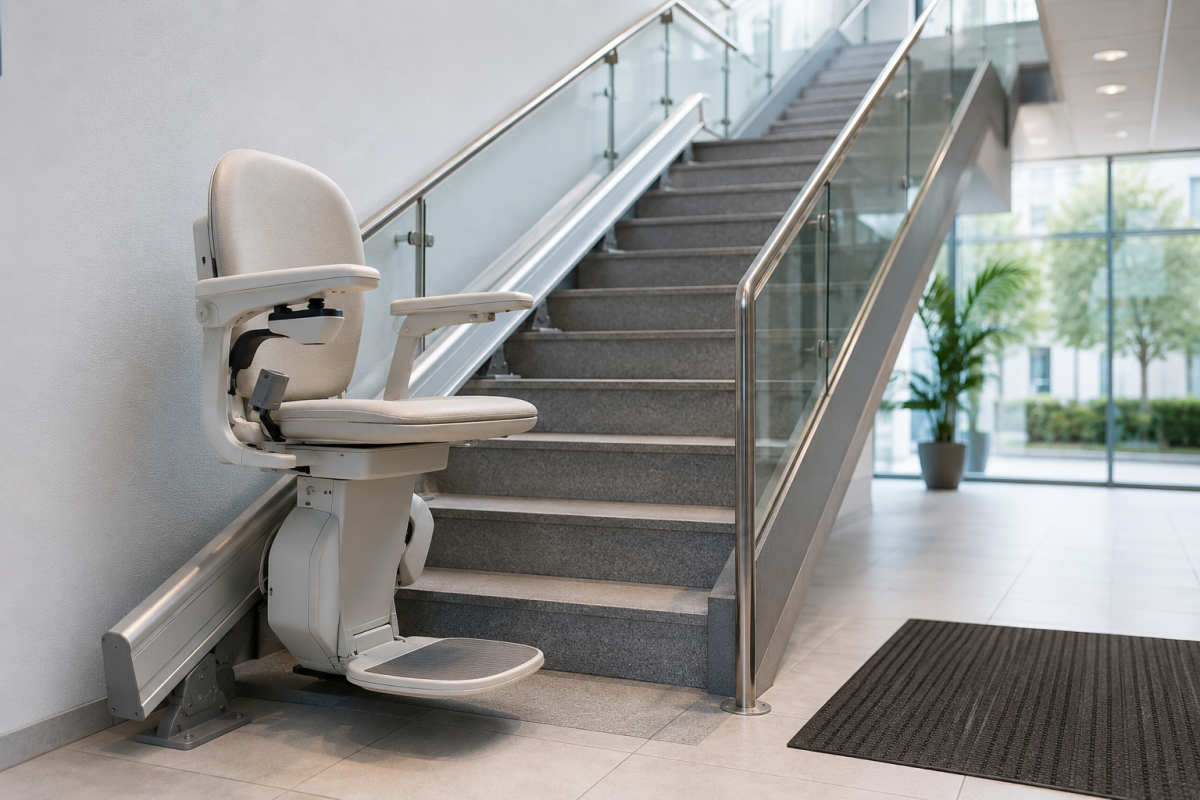
Designed for stairways with a single, uninterrupted straight run, these are generally the most straightforward and cost-effective option when the staircase layout allows for it.
Curved Stair Lifts
For staircases with turns, landings, or irregular shapes, curved stair lifts are custom built to follow the exact path of the stairway. These tend to involve more complex installation and higher cost due to the custom manufacturing involved.
Platform Lifts
Rather than a seated lift, platform lifts accommodate wheelchairs or mobility devices directly, making them a common choice for businesses prioritizing full accessibility for wheelchair users specifically.
Outdoor Stair Lifts
For properties with exterior stairs, outdoor rated stair lifts are built with weather resistant materials designed to withstand outdoor exposure while still providing reliable function.
What Influences Installation Cost
Several factors affect what a commercial stair lift installation will actually cost:
- Straight vs. curved design: Curved lifts typically cost more due to custom manufacturing requirements.
- Lift type: Platform lifts often involve a higher cost than standard seated stair lifts due to their design and capacity requirements.
- Staircase complexity: Additional landings, turns, or unusual dimensions can increase both material and labor costs.
- Building specific factors: Existing structural conditions, available space, and electrical access can all influence installation complexity.
Given this variability, a proper on site assessment is generally necessary to provide an accurate cost estimate rather than relying on general pricing averages.
What the Installation Process Typically Involves
Initial Site Assessment
A qualified installer evaluates the staircase, measuring dimensions and assessing structural and electrical considerations specific to your property.
Lift Selection and Customization
Based on the assessment, the appropriate lift type is selected, and for curved staircases, custom manufacturing is arranged to match the exact shape of the stairway.
Installation
Professional installation includes securing the track system, connecting necessary electrical components, and thoroughly testing the lift for safe, reliable operation.
Final Testing and Walkthrough
Once installed, the lift should be tested thoroughly, and the installer should walk through proper operation and safety features with relevant staff members.
Maintenance Considerations for Business Owners
Unlike residential stair lifts that see occasional use, commercial stair lifts often experience significantly more frequent use throughout the day. This makes regular maintenance particularly important to ensure continued safe and reliable operation, along with prompt attention to any unusual noises, slow movement, or operational issues that arise over time.
Final Thoughts
Commercial stair lift installation offers businesses a practical, often more cost-effective path toward genuine accessibility compared to major structural renovations like full elevator installation. Whether the goal is regulatory compliance, better accessibility for employees, or creating a more welcoming experience for all customers, choosing the right lift type and working with an experienced installer makes a meaningful difference in the long-term reliability of the system.
If you’re considering accessibility upgrades for your business property, HomeAbility Store offers professional stair lift installation services for commercial properties in the Jacksonville area.
Frequently Asked Questions
1. How much does commercial stair lift installation typically cost?
Costs vary significantly depending on whether a straight or curved lift is needed, the type of lift selected, and specific building conditions, so an on site assessment is the most reliable way to get an accurate estimate.
2. Are commercial stair lifts required for ADA compliance?
Requirements vary depending on the type of business and building, but stair lifts can be part of meeting accessibility obligations, particularly in buildings where full elevator installation isn’t practical.
3. How long does installation typically take?
Straight stair lifts can often be installed within a day or two, while curved lifts generally take longer due to custom manufacturing and more complex installation requirements.
4. How much weight can a commercial stair lift typically hold?
Weight capacity varies by model, but commercial stair lifts are generally designed to accommodate a wide range of users, with platform lifts often built to support both the individual and their mobility device.
5. How often should a commercial stair lift be serviced?
Given the more frequent use commercial lifts typically experience, regular maintenance, often recommended at least annually, helps ensure continued safe and reliable operation over time.