Lift Chairs in Jacksonville, FL: What Medicare Actually Pays in 2026 (And What It Doesn’t)
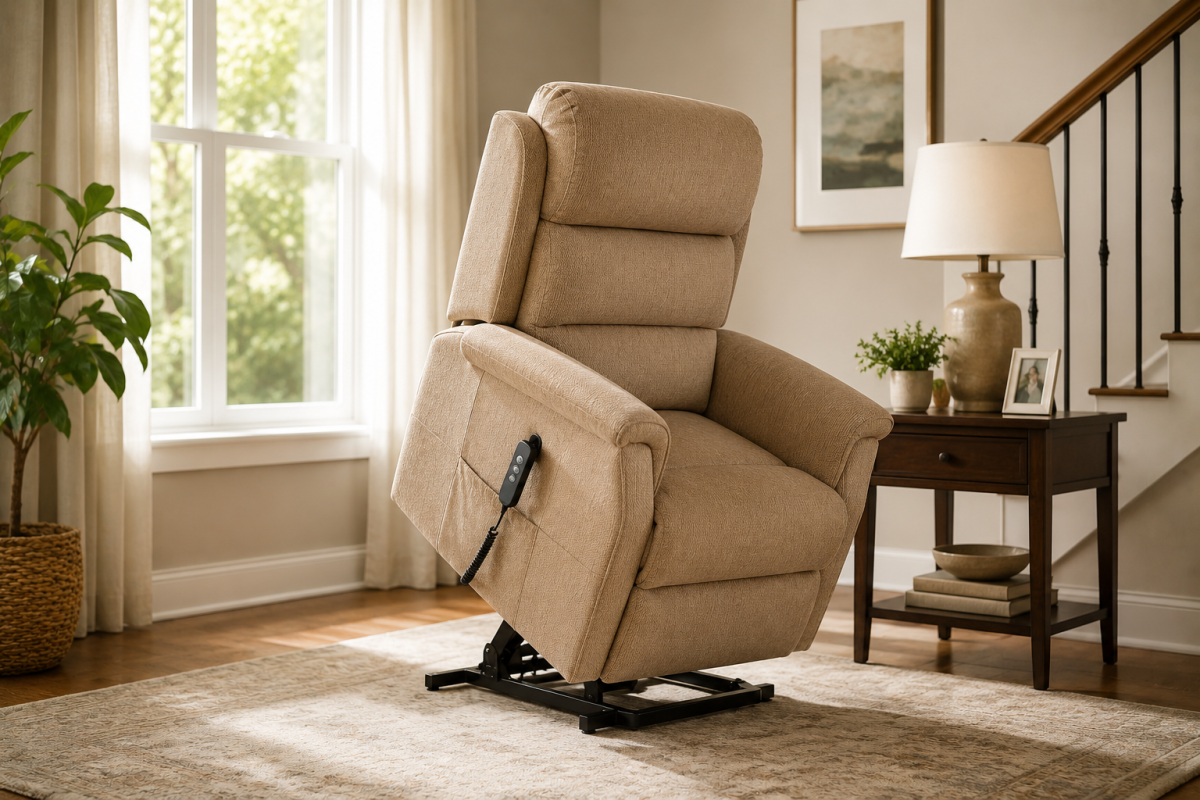
Medicare Part B pays for the motorized seat-lift mechanism inside a lift chair, not the chair itself. Medicare treats the lift chair as two separate things: a motor (durable medical equipment, HCPCS code E0627) and a recliner (furniture, not covered). After the 2026 Part B deductible of $283, Medicare pays 80% of the approved amount for the mechanism, which generally falls between about $300 and $420. In practice that’s roughly $250 back on a chair that may cost $900–$3,000. You pay the rest.
Key takeaways
- Medicare covers only the lift mechanism, never the upholstery, frame, cushions, recline, heat, or massage.
- 2026 Part B deductible: $283. Medicare then pays 80% of the approved mechanism amount.
- You need a doctor’s order and form CMS-849, and the doctor must be treating the condition that creates the need.
- The standard is inability to rise from an ordinary chair, not merely difficulty.
- You must buy from a Medicare-enrolled supplier, or Medicare pays nothing at all.
- Not covered if the person lives in a skilled nursing facility, nursing home, or hospice.
Does Medicare cover lift chairs in Jacksonville, FL?
Partially. And the gap between what people expect and what they get is where most of the frustration lives.
A power lift chair is a recliner with a motor bolted underneath. That motor, the seat-lift mechanism, tilts the seat forward and upward to help someone move from sitting toward standing. Medicare treats that motor as durable medical equipment. It treats everything else as household furniture: the frame, the cushions, the fabric, the reclining function, the heat and massage features.
So Medicare’s payment is calculated against the price of the mechanism, not the sticker price of the chair. If you buy a $1,400 lift chair, expect Medicare’s share to be in the neighborhood of $250, not $1,120.
There’s one more wrinkle worth knowing: if the unit combines a recliner with the seat lift, Medicare’s payment is capped at what it would pay for a seat lift without the recliner feature.
What Medicare pays in 2026, step by step
| Item | 2026 amount |
| Part B annual deductible | $283 |
| Medicare-approved amount for seat-lift mechanism (E0627) | Roughly $300 – $420, varies by region |
| Medicare’s share after deductible | 80% of approved amount (commonly reported near $247) |
| Your coinsurance | 20% of approved amount |
| Chair furniture portion | 100% yours |
If you carry a Medigap policy such as Plan G, the 20% coinsurance is typically picked up, leaving the Part B deductible and the full furniture cost.
| Be skeptical of any ad promising a “free lift chair through Medicare.” That claim isn’t accurate under Original Medicare rules, and it’s a reliable signal of a supplier worth avoiding. |
Who qualifies for Medicare lift chair coverage?
Medicare’s criteria are specific. Generally, all of the following need to be true:
- You have severe arthritis of the hip or knee, or a severe neuromuscular disease such as Parkinson’s, MS, or muscular dystrophy.
- You are completely unable to stand up from any ordinary chair in your home. Difficulty is not enough; the standard is inability.
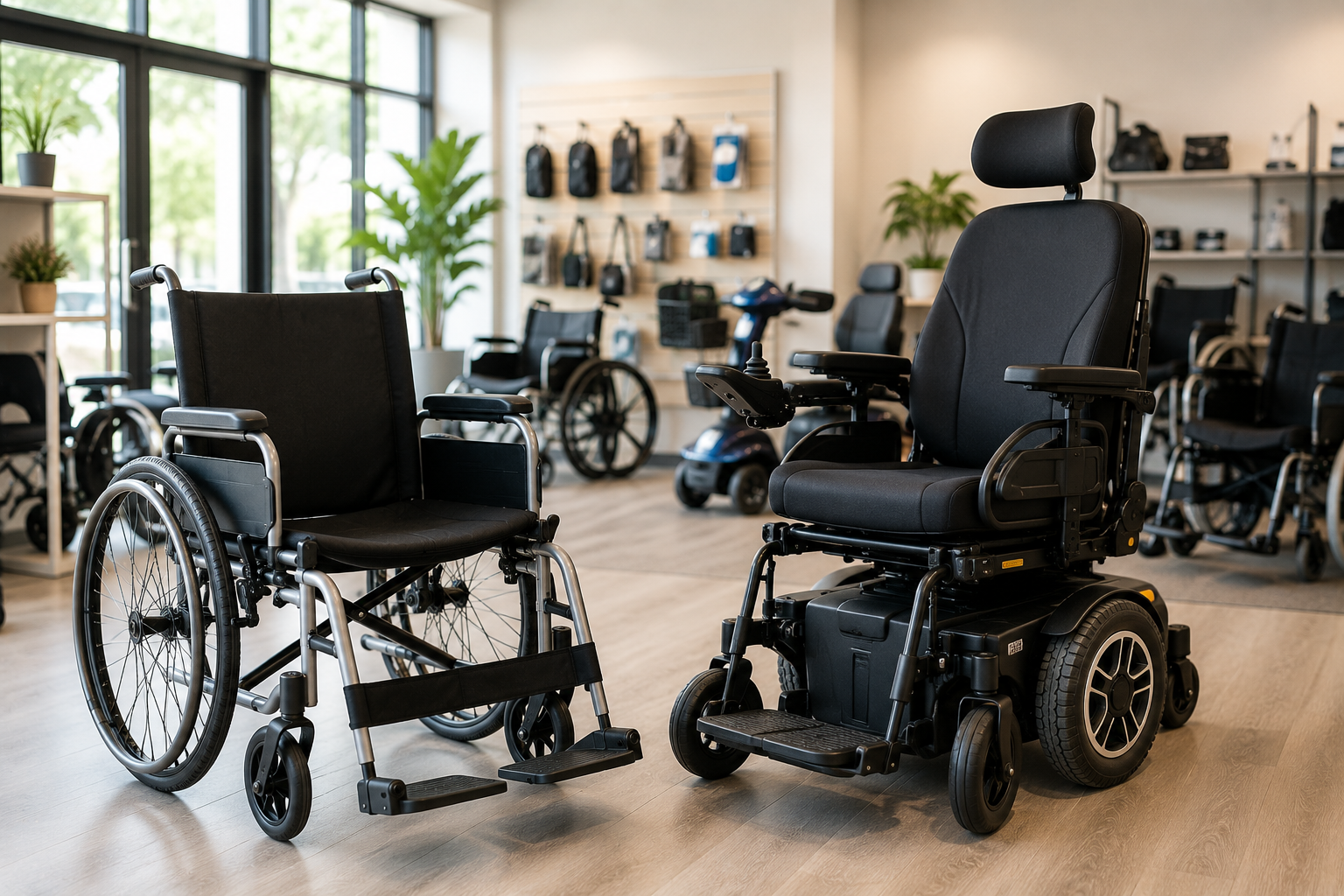
- Once standing, you can walk independently or with a walker or cane. Someone who transfers straight into a wheelchair typically will not qualify, and a power wheelchair in Jacksonville is usually the better route in that case.
- The chair is part of a course of treatment intended to improve or slow deterioration of your condition.
- You do not live in a skilled nursing facility, nursing home, or hospice.
The paperwork
- Your treating physician, the one managing the qualifying condition, completes form CMS-849, the Certificate of Medical Necessity for a seat-lift mechanism. A doctor who hasn’t treated that condition can’t sign it.
- The prescribing doctor and the supplier must both be enrolled in Medicare. Buying from a furniture store or a big-box retailer means zero reimbursement, no matter how good the paperwork is.
- Choosing a supplier who accepts assignment limits what you can be billed.
- Keep copies of everything. Denials are frequently document problems rather than eligibility problems.
Medicare Advantage members: your plan may be more generous than Original Medicare, and some plans also cover grab bars and bathroom safety equipment. Call the number on your card and ask specifically about “power lift chairs” and code E0627 before you shop.
2-position, 3-position, or infinite-position: which lift chair should I buy?
| Type | How far it reclines | Best for | Price |
| 2-position | Upright to about a 45° recline, legs elevated | Reading, TV, short rests; most affordable | $$ |
| 3-position | Adds a near-flat recline | Napping, back pressure relief, longer sitting | $$$ |
| Infinite-position (zero gravity) | Back and legs move independently on two motors | Edema, circulation issues, sleeping in the chair, all-day use | $$$$ |
A practical rule: if the chair will be used mainly for sitting, a 3-position model is usually enough. If someone is going to sleep in it, which is common after cardiac surgery, or with severe COPD, reflux, or edema, go infinite-position. The independent leg elevation above heart level is the whole point, and a 3-position chair can’t do it. If the chair is replacing a bed most nights, compare it against an adjustable bed in Jacksonville before you commit.
Sizing matters more than features
A lift chair that doesn’t fit the person is unsafe regardless of how many motors it has. Measure before you buy:
- Seat-to-floor height. Feet should rest flat on the floor with knees at roughly 90°.
- Seat depth. About two fingers of gap behind the knee when the back is against the backrest.
- Seat width. A couple of inches of room on each hip, no more.
- Overall height. This determines how tall a person the backrest actually supports.
- Weight capacity. Standard chairs commonly go to 375 lb; bariatric models go higher.
- Wall clearance. Traditional models need 12–18 inches behind them; wall-hugger models need only a few inches, which matters in the smaller floor plans common in older Jacksonville and Riverside homes.
This is the single strongest argument for buying from a local showroom rather than online. Fifteen minutes actually sitting in three chairs settles a question no spec sheet can. Our Jacksonville showroom carries lift chairs alongside the rest of our home medical equipment, so one visit can cover several needs.
Other ways to pay in Northeast Florida
- Florida SMMC Long-Term Care. Medicaid-eligible Floridians who need nursing-facility level of care may access equipment and home adaptations through their long-term care managed care plan. Start with a phone screening through your Aging & Disability Resource Center or the Elder Helpline at 1-800-963-5337.
- ElderSource. The state-designated Area Agency on Aging for Baker, Clay, Duval, Flagler, Nassau, St. Johns, and Volusia counties. Their free HelpLine is the right first call when you don’t yet know which program fits.
- VA benefits. Veterans should ask their VA prosthetics representative or social worker about equipment provided directly through VA rather than through Medicare. The HISA grant that helps with stair lifts in Jacksonville is a separate program from DME benefits.
- Florida sales tax. Certain prosthetic and orthopedic appliances are exempt from Florida sales tax, some automatically and some with a prescription, under the state’s DR-46NT list. Ask your dealer whether the item you’re buying qualifies before you assume tax applies.
Frequently asked questions
How much does a lift chair cost in Jacksonville?
Most lift chairs fall between roughly $900 and $3,000 depending on position type, size, fabric, and features. Medicare’s contribution applies only to the lift mechanism.
Can I rent a lift chair instead of buying?
Some suppliers rent, which can make sense for short-term recovery after hip or knee surgery. Ask about rental-to-purchase credit if there’s a chance the need becomes permanent, and check our used mobility products if budget is the constraint.
Does Medicare cover a lift chair for someone in a nursing home?
No. The seat-lift mechanism is not covered for residents of skilled nursing facilities, nursing homes, or hospice.
Do I need a prescription to buy a lift chair?
Not to buy one. Anyone can purchase a lift chair. You need a physician’s order and form CMS-849 only if you want Medicare to pay toward the mechanism.
How long do lift chairs last?
Typically 8–10 years with normal use. The motor and hand control are the components most likely to need service; ask about warranty terms on each separately.
Are lift chairs safe on carpet?
Yes. What matters more is stable, level flooring and enough clearance in front of the chair for the footrest to extend fully.
See lift chairs in person in Jacksonville
Home Ability Store is a local lift chair dealer serving Jacksonville and Northeast Florida. Come sit in the chairs, get measured properly, and get a straight answer about what Medicare will and won’t reimburse in your situation, before you buy rather than after.
Browse lift chairs and book a showroom visit
Located at 3728 Philips Highway, Suite 22, Jacksonville FL. Call (904) 999-4705
Serving Jacksonville, Orange Park, Ponte Vedra, Mandarin, Fernandina Beach, and St. Augustine.