Mobility Equipment in Jacksonville, FL: A Guide to Scooters, Power Chairs, Walkers, and Lift
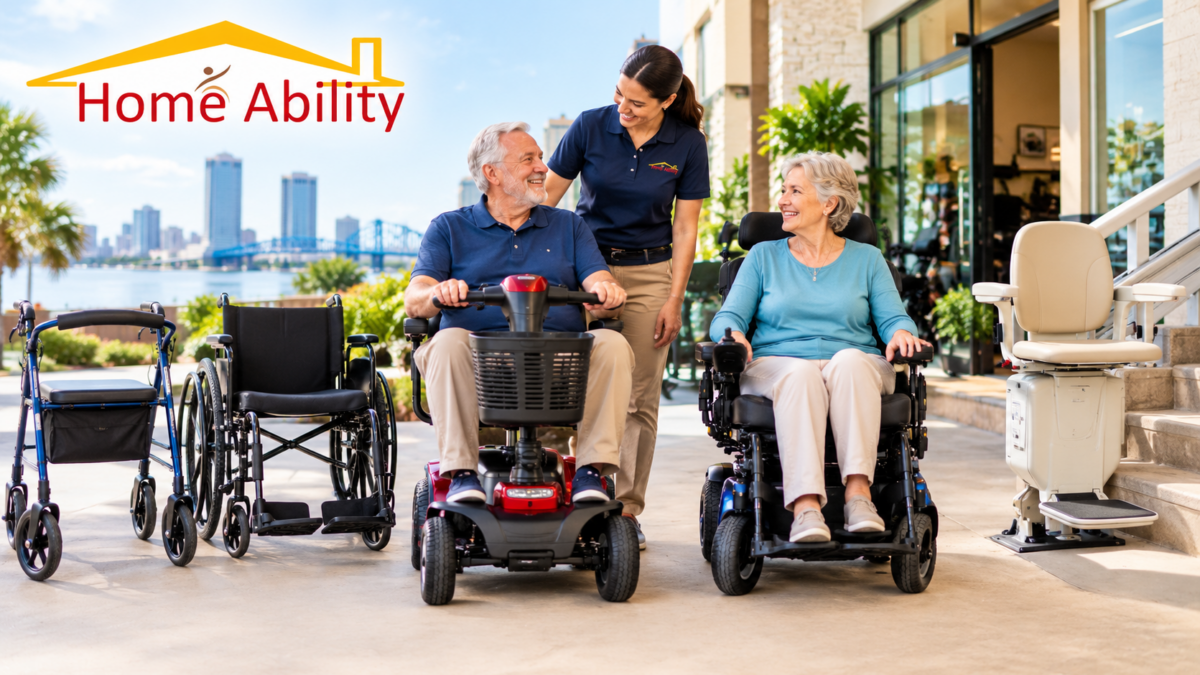
When getting around gets harder, the options can feel overwhelming. Canes, walkers, scooters, power chairs, stair lifts, adjustable beds: each solves a different problem, and the right choice depends on what’s actually difficult for you or the person you’re helping. This guide gives a plain-language overview of the main types of mobility equipment in Jacksonville, FL, what each is for, and how to narrow down your choices. It’s general information, not medical advice, so it’s wise to talk with a doctor or therapist about your specific needs.
Start With the Problem, Not the Product
Before looking at equipment, ask what you’re trying to do more safely or more easily:
- Walk steadily around the house
- Go farther than your energy allows
- Get up and down stairs
- Get in and out of bed
- Bathe and use the bathroom safely
- Travel in a car or take the equipment on trips
Your answer points you toward the right category.
Walking Aids: Canes, Walkers, and Rollators
Walking aids provide stability and support for people who can walk but need help with balance or endurance.
- Canes offer light support.
- Walkers provide more stability and are used while stepping.
- Rollators have wheels and often a seat and brakes, which can help with longer walks and rest breaks.
They’re generally portable and among the most affordable options, but choosing the right height and style matters for safety.
Manual Wheelchairs and Transport Chairs
These suit people who can’t walk long distances or who need a seat while out and about. Manual chairs can be self-propelled or pushed by a caregiver. Transport chairs are typically lighter and designed to be pushed, which makes them easier to carry in a car.
Mobility Scooters
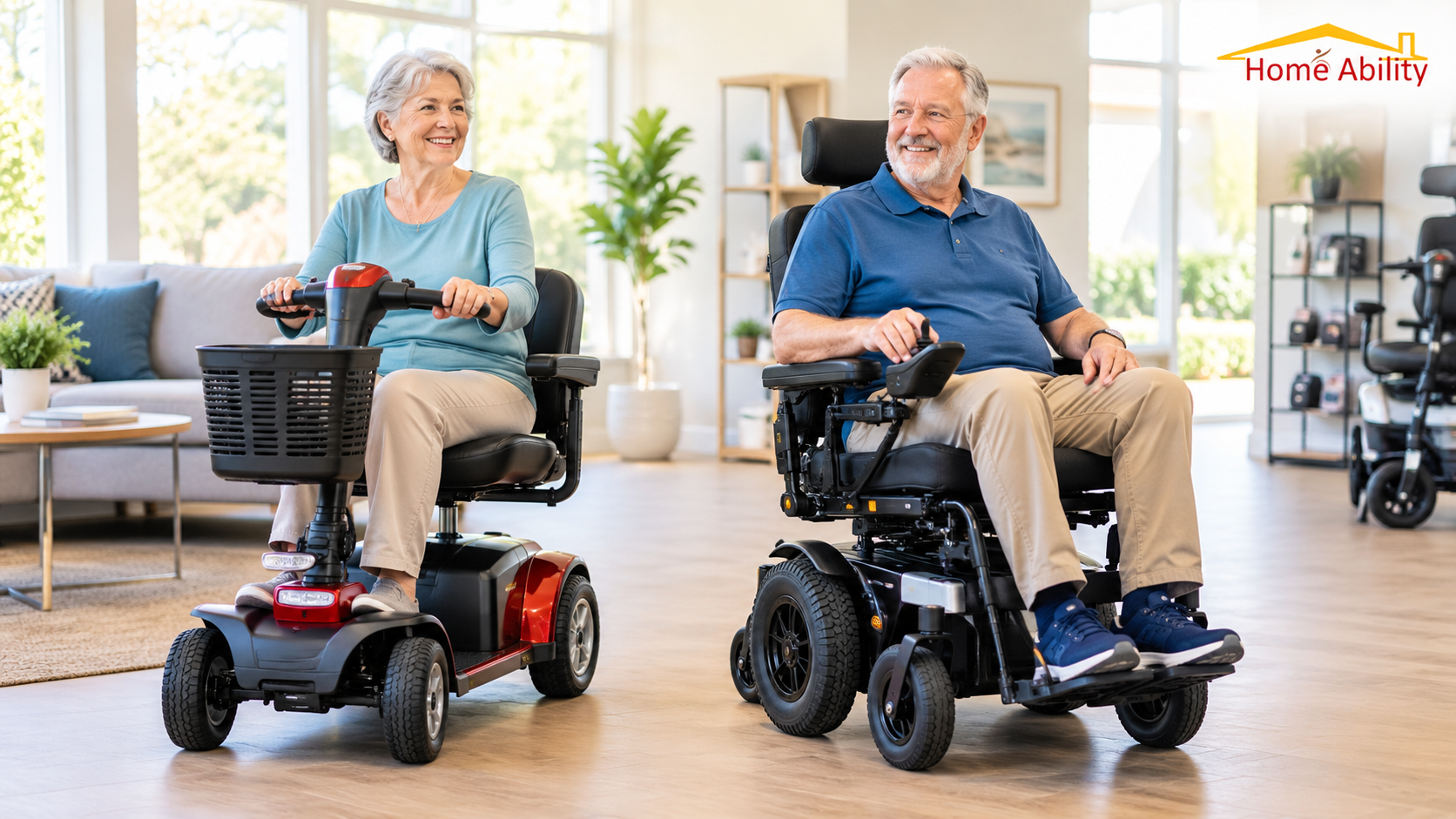
Scooters are designed for people who can sit upright and transfer on and off independently but struggle with distance. They’re popular for errands, outings, and getting around the neighborhood. Portable models break down for transport, while larger models offer more stability and range.
Power Wheelchairs
Power chairs give more support than a scooter and can include features such as specialized seating and alternative controls. They suit people who need more positioning support or who can’t reliably operate a scooter. Fit, seating, and control options are important, so professional guidance is especially valuable here.
Lifts and Access Solutions
Stair Lifts
A stair lift carries a seated rider up and down stairs along a rail, helping people stay in a multi-level home. Straight staircases are simpler to fit, while curved ones typically require custom rails.
Platform and Vertical Lifts
These can help wheelchair and scooter users move between levels or enter a home, depending on the site and design.
Ramps
Ramps provide step-free access at entries and thresholds, with slope and length that must suit the user and the space.
Beds and Bedroom Equipment
Adjustable and hospital-style beds let users raise the head or feet and sometimes adjust height, which can make resting, reading, and transfers easier. Compatibility with mattresses and room layout matters.
Bathroom Safety
Grab bars, shower chairs, raised toilet seats, and non-slip surfaces reduce fall risks in a high-risk room.
Quick Guide: Which Option for Which Need?
| Need | Options to consider |
|---|---|
| Balance and stability while walking | Cane, walker, rollator |
| Limited walking distance | Rollator, transport chair, scooter |
| Longer outings and errands | Mobility scooter |
| More support and positioning | Power wheelchair |
| Stairs in the home | Stair lift |
| Moving between levels or entering the home | Platform lift, ramp |
| Comfort and ease in bed | Adjustable or hospital bed |
| Bathroom safety | Grab bars, shower chair, raised toilet seat |
Questions to Ask Before You Buy
- What exactly do I need this equipment to do?
- Will it fit my home, doorways, and car?
- Who will use it, and can they operate it safely?
- What are my weight, height, and seating needs?
- What maintenance and service support is available locally?
- Might insurance or other programs help with the cost?
Why Try It in Person
Fit and comfort matter more with mobility equipment than with almost any other purchase. Testing models in person, with someone who can adjust them and answer questions, helps you avoid choosing something that looks right on paper but doesn’t work in daily life.
Final Thoughts
The right equipment depends on your needs, your home, and your daily routine. Start with the problem you want to solve, learn the options, and choose with guidance from professionals who can fit and service what you buy.
If you’d like help exploring your options, HomeAbility Store offers mobility equipment and guidance for people across the Jacksonville area.
Frequently Asked Questions
1. How do I know whether I need a scooter or a power wheelchair?
It depends on your seating, posture, and control needs. A healthcare provider and a knowledgeable retailer can help you decide.
2. Can I try equipment before I buy it?
Visiting a showroom lets you test fit and comfort, and ask questions about features and service.
3. Does insurance cover mobility equipment?
Coverage varies by plan and by the type of equipment, so check with your provider about requirements.
4. Will a stair lift work on a curved staircase?
Yes, but curved stairs typically require a custom-built rail.
5. Is this guide medical advice?
No. It’s general information, and a doctor or therapist can recommend what’s right for your situation.