Mobility Scooter vs. Power Wheelchair: Which Is Right for You?
Mobility scooters and power wheelchairs both run on batteries and both help people get around without relying on their own legs or arms. But they’re built for different needs, and choosing the wrong one can mean frustration, discomfort, or a purchase that doesn’t last. If you’re comparing mobility equipment in Jacksonville, FL, this side-by-side guide explains how the two differ, who each one suits, and what to consider before you decide. It’s general information, so ask a doctor or therapist about your specific needs too.
The Basic Difference
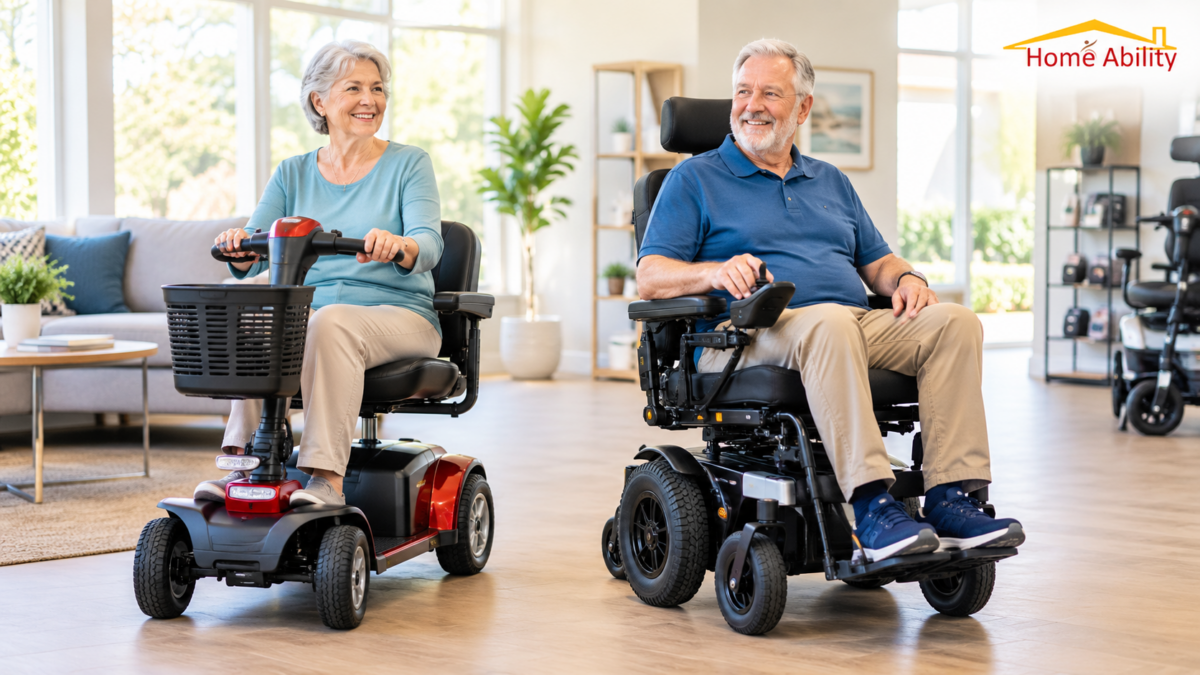
A mobility scooter looks like a small vehicle, with a seat, a steering column (called a tiller), and typically three or four wheels. A power wheelchair looks like a wheelchair with a motor, controlled by a joystick or another control system, and designed to support the user’s body and positioning.
Put simply, scooters are usually designed for people who are mostly mobile but tire easily, while power wheelchairs are designed for people who need more support in sitting, positioning, or control.
How They Compare
| Factor | Mobility scooter | Power wheelchair |
|---|---|---|
| Steering | Tiller, which needs hand and arm strength and grip | Joystick or alternate controls |
| Seating and support | Basic seat, some adjustable | More options for seating, tilt, recline, and positioning |
| Turning in tight spaces | Wider turning radius | Often tighter, better for indoors |
| Typical use | Errands, outings, neighborhood trips | Daily mobility at home and out |
| Transfers | User must get on and off independently | May suit users who need transfer support or a wheelchair-style seat |
| Transport | Many models disassemble or are portable | Often heavier, may need a lift or ramp-equipped vehicle |
| Outdoor performance | Often good, varies by model | Varies by model and drive type |
| Customization | Limited | Extensive |
Who a Mobility Scooter May Suit
- People who can walk short distances but tire quickly
- Users who can sit upright comfortably and get on and off by themselves
- Those with enough hand and arm control to steer a tiller
- People who want to run errands, shop, or enjoy outings
- Households that need a model they can take apart for the car
Scooters can be a good choice when the main challenge is distance and energy, not posture or control.
Who a Power Wheelchair May Suit
- People who need more support to sit comfortably for long periods
- Users who need tilt, recline, or specialized cushions
- Those who can’t reliably operate a tiller and may need a joystick or alternate control
- People who need to maneuver in tight indoor spaces
- Users who rely on the chair for most of their daily mobility
Power wheelchairs tend to offer more fitting options, which is why professional assessment matters.
Indoor vs. Outdoor Considerations
Scooters are often a good fit for outdoor use and open spaces, while their larger turning radius can make narrow hallways and small rooms challenging. Power wheelchairs often handle tight spaces better. Both vary a lot by model, so test the chair in conditions similar to where you’ll use it, including thresholds, doorways, and sidewalks.
Practical Questions to Ask Yourself
- Can I sit upright comfortably and transfer on and off safely on my own?
- Do I have the hand and arm strength and control to use a tiller?
- Where will I use it most: at home, outdoors, or both?
- How narrow are my doorways and hallways?
- How will I transport it?
- Do I need specialized seating or positioning support?
- What might my needs look like a year or two from now?
If you’re unsure about any of these, it’s a sign to get a professional assessment.
Why a Professional Assessment Helps
A physician, occupational therapist, or physical therapist can evaluate your posture, strength, and control, and recommend the type of equipment that suits you. This also matters for insurance, which may require documentation of medical need. Requirements vary, so check with your plan.
Try Before You Buy
Specifications on paper can’t tell you how a seat feels, how a tiller responds, or how a joystick handles. Visit a showroom, test several models, and ask about fitting, adjustments, delivery, and service.
Final Thoughts
A scooter is typically the better fit when you mainly need help with distance and can sit and steer comfortably. A power wheelchair is typically the better fit when you need more support, positioning, or alternative controls. The best choice comes from matching the equipment to your body, your home, and your daily routine.
If you’d like to compare options in person, HomeAbility Store offers mobility equipment and guidance for people across the Jacksonville area.
Frequently Asked Questions
1. Which is easier to use indoors?
Power wheelchairs often handle tight spaces better, though it depends on the model and your home’s layout.
2. Can I use a scooter if I have limited hand strength?
It can be difficult, since scooters use a tiller that needs grip and arm control. A power wheelchair with a joystick or alternate controls may be a better fit.
3. Which is easier to transport?
Many scooters are designed to break down for the car, while power wheelchairs are often heavier and may need a lift or special vehicle setup.
4. Will insurance pay for either one?
Coverage depends on your plan and documentation of medical need, so check with your provider.
5. Is this medical advice?
No. It’s general information, and a healthcare professional can recommend what’s right for you.